



Understanding equine communication is crucial for establishing trust and fostering companionship with horses. These intelligent and social animals utilize a range of nonverbal signals to convey their thoughts and emotions. Observing a horse’s behavior can uncover a wide array of feelings and intentions, enabling deeper connections and fostering mutual respect and empathy during interactions. Resources such as horse readings have become invaluable aids for those wishing to tune into the subtle language of horses, making every encounter more meaningful while supporting both equine welfare and human insight.
Horses have developed acute senses and expressive behaviors as prey animals, using silent signals beyond verbal cues to navigate social interactions. Understanding this unspoken language enables horse owners and trainers to anticipate behavioral issues, foster trust, and improve welfare. This knowledge promotes balanced partnerships where both horse and human support each other, emphasizing the importance of patience, observation, and continuous learning in the equestrian field.
Facial Expressions
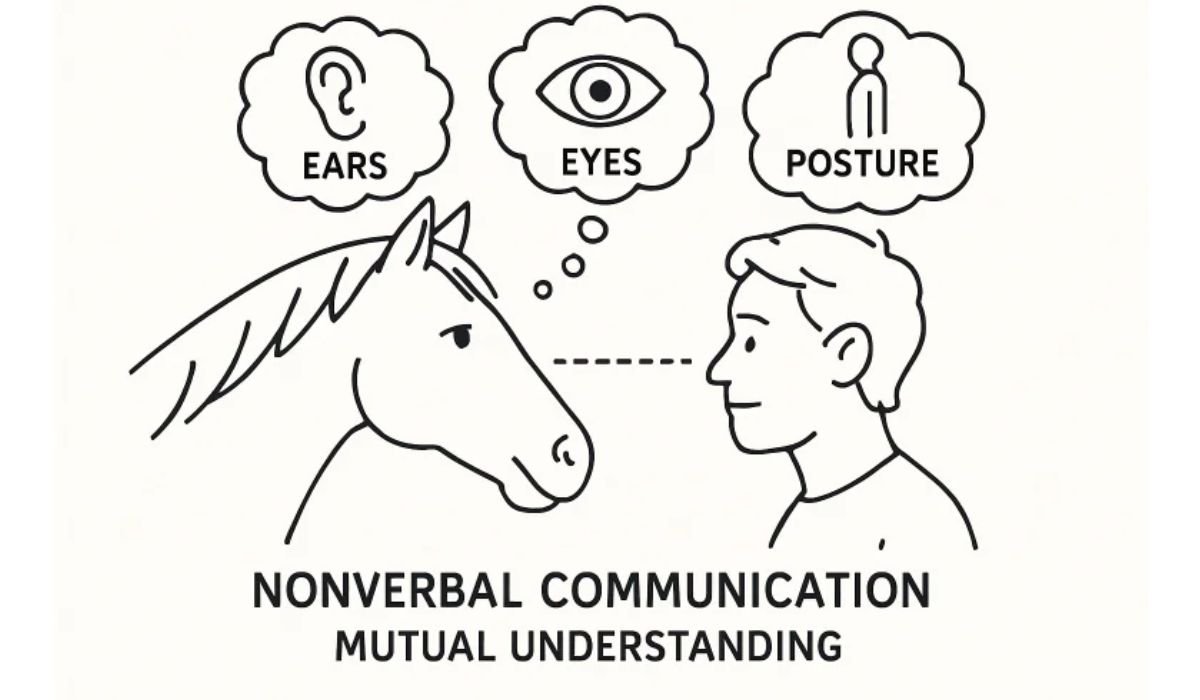
Subtle shifts in a horse’s facial muscles act as windows into their emotions, offering insights that attentive humans can learn to read with diligent practice. Recent research has cataloged at least 17 distinct facial movements in horses, each one revealing different shades of emotional experience. For example, ears pressed firmly back, tightly flared nostrils, and tensed lips will often signal discomfort, irritation, or agitation. Soft, blinking eyes and loose, gently moving lips, on the other hand, communicate calm acceptance, trust, and relaxation. These expressions can be fleeting or continuous and often occur in response to environmental changes or human interaction. Cultivating the ability to read such nuances enables owners to prevent misunderstandings, thus avoiding potentially dangerous situations or unnecessary stress. More importantly, it helps nurture richer, more positive daily relationships. The ongoing scientific study of equine facial expressions not only advances our knowledge of animal welfare but also deepens our appreciation for animal cognition and empathy, further bridging the gap between species.
Ear Movements
A horse’s ears function as finely tuned instruments, acting much like miniature radar dishes that are constantly moving to capture sounds and convey a wide range of impulses. Ear position is one of the most visible and easily interpreted aspects of equine communication. Ears pricked forward generally indicate interest, curiosity, or engagement with something in the environment—perhaps a person approaching, a distant sound, or an object worth investigating. When one or both ears flick backward, it may indicate that the horse is irritated, uncomfortable, or simply listening to sounds behind them. Extremely pinned ears (flattened tightly against the skull) can signal anger or serve as a warning before a defensive or aggressive action, such as biting or kicking.
In some cases, ears that move independently can indicate that a horse is processing multiple stimuli simultaneously—a testament to its alertness and intelligence. Understanding these signals provides handlers with crucial insight into a horse’s thoughts, enabling them to respond in a timely and empathetic manner to signs of stress, anticipation, or curiosity. By respecting the ways horses communicate with their ears, people can create safer and more harmonious environments.
Body Language
Equine body language is a rich, nuanced form of communication that integrates posture, movement, and spatial relationships with humans and other animals. Relaxed body language—such as a lowered head, softly cocked hind leg, or rhythmic swishing tail—tells us the horse feels comfortable, safe, and trusting in the moment. In social groups, horses often mirror each other’s relaxed gestures as a way to reinforce bonds and social stability. Conversely, a horse that tenses its neck, arches its back like a bow, or prances anxiously is often experiencing stress, fear, or high excitement, perhaps anticipating the need to flee from perceived danger. Subtle shifts, such as weight transfer, stance width, or muscle tightness, offer additional windows into a horse’s internal world.
For handlers and caretakers, mastering equine body language means being able to distinguish between playful exuberance and genuine distress. Quick recognition of these cues allows humans to de-escalate tense situations and reward calm or friendly behaviors proactively. Creating positive associations through touch, movement, and voice can help reshape fearful or defensive reactions over time. An attentive handler continuously adjusts their approach based on how their horse’s body communicates, fostering safety, cooperation, and mutual understanding in every interaction.
Vocalizations
Though naturally quieter than many other domesticated animals, horses employ a nuanced set of sounds to communicate both within their herds and with people. Nickers tend to be soft, low, and affectionate, most commonly heard as greetings between horses or as a mare reassuring her foal. Whinnies and neighs, by contrast, are louder, traveling long distances to help horses locate companions, express separation anxiety, or warn of potential threats. Each vocalization carries subtle variations in pitch, volume, and rhythm—clues to what a horse is feeling in the moment.
Other sounds, such as snorts, groans, and squeals, have their own meanings. A snort might indicate excitement or mild alarm, while a sharp squeal can signal frustration, resistance, or an escalation in social hierarchy disputes. Recognizing the circumstances and emotional tone of these vocalizations allows owners and caregivers to interpret a horse’s needs and mood more accurately. It’s essential to remember that vocal signals rarely occur in isolation; they’re usually paired with facial expressions, ear movements, and body language. Holistic observation ensures that horse owners foster clear, compassionate communication, enhancing trust and responsiveness in their horses. Continued research reveals even deeper complexities and unheard signals within equine vocal repertoires.
Symbolic Communication
Recent scientific studies have revealed that horses are capable of symbolic communication—using objects, gestures, or signs to represent their preferences or to relay requests to their human partners. In carefully designed experiments, horses have learned to press or touch symbols on a board to indicate whether they wish to wear a blanket on a chilly day or remove it when warm. This level of communication not only demonstrates advanced associative learning and problem-solving abilities but also shows horses’ willingness to engage actively and cooperatively with humans. Such discoveries challenge traditional assumptions about equine intelligence and emotional depth, illustrating that horses are far more than passive recipients in human-animal relationships. These findings encourage trainers and owners to adopt more open and responsive methods, further empowering horses to participate in their own care and expression.
Technological Advancements in Understanding Equine Communication
Thanks to technological innovation, our understanding of equine communication has advanced significantly over the last decade. Artificial intelligence-based video analysis tools allow researchers and trainers to decode complex behaviors and subtle micro-expressions that might otherwise go unnoticed by the human eye. Wearable tech for horses, including heart rate monitors and accelerometers, provides real-time data on stress, pain, and wellness, revolutionizing the ways veterinarians and caretakers detect issues. This early insight supports more proactive intervention and tailors care to each horse’s individual needs. For trainers, digital feedback from sensors and smart cameras helps refine training methods, ensuring they’re more ethical and practical while reducing confusion or discomfort. These advances promise to bridge remaining gaps in understanding, increasing the quality of life for horses and deepening the bonds they share with people across all equestrian disciplines.
Conclusion
Deciphering the language of horses requires not only a keen power of observation but also a deep respect for their unique social intelligence and individuality. By paying close attention to facial expressions, ear orientation, body posture, and vocal cues, humans gain access to a remarkable nonverbal dialogue that can transform the very nature of the human-horse relationship. Continued research and innovative technologies are opening new doors to understanding, ensuring that every interaction—whether for companionship, sport, work, or therapy—is rooted firmly in empathy, patience, and trust. As we become increasingly skilled at interpreting these signals, we deepen our appreciation for the complex minds and gentle spirits of horses, recognizing them as true partners in our shared journey.